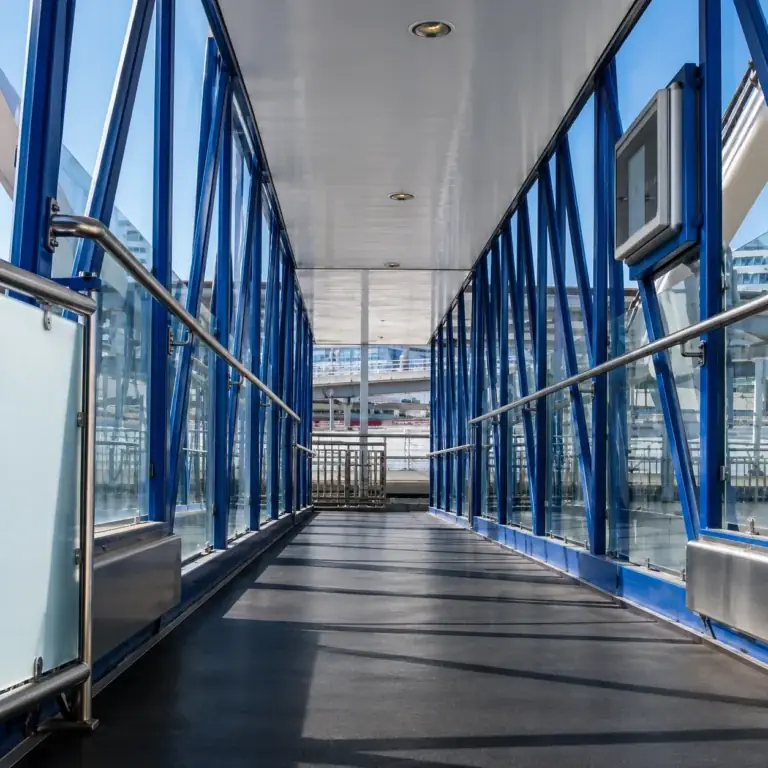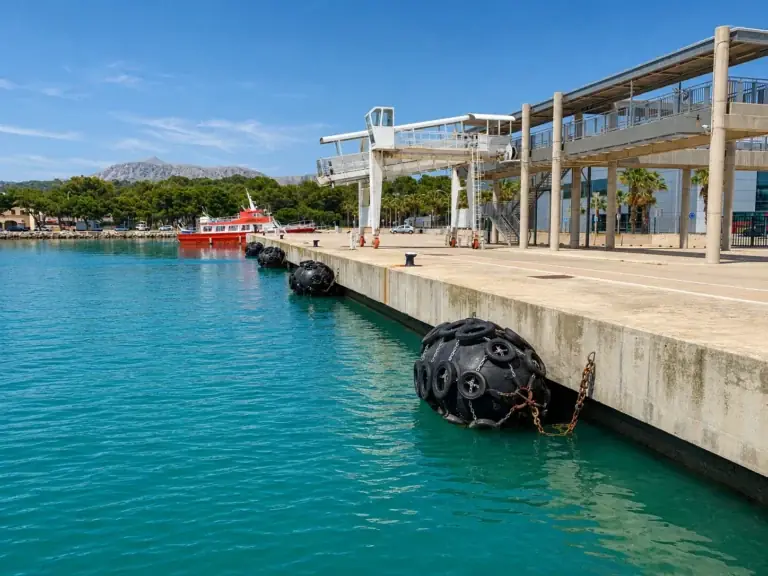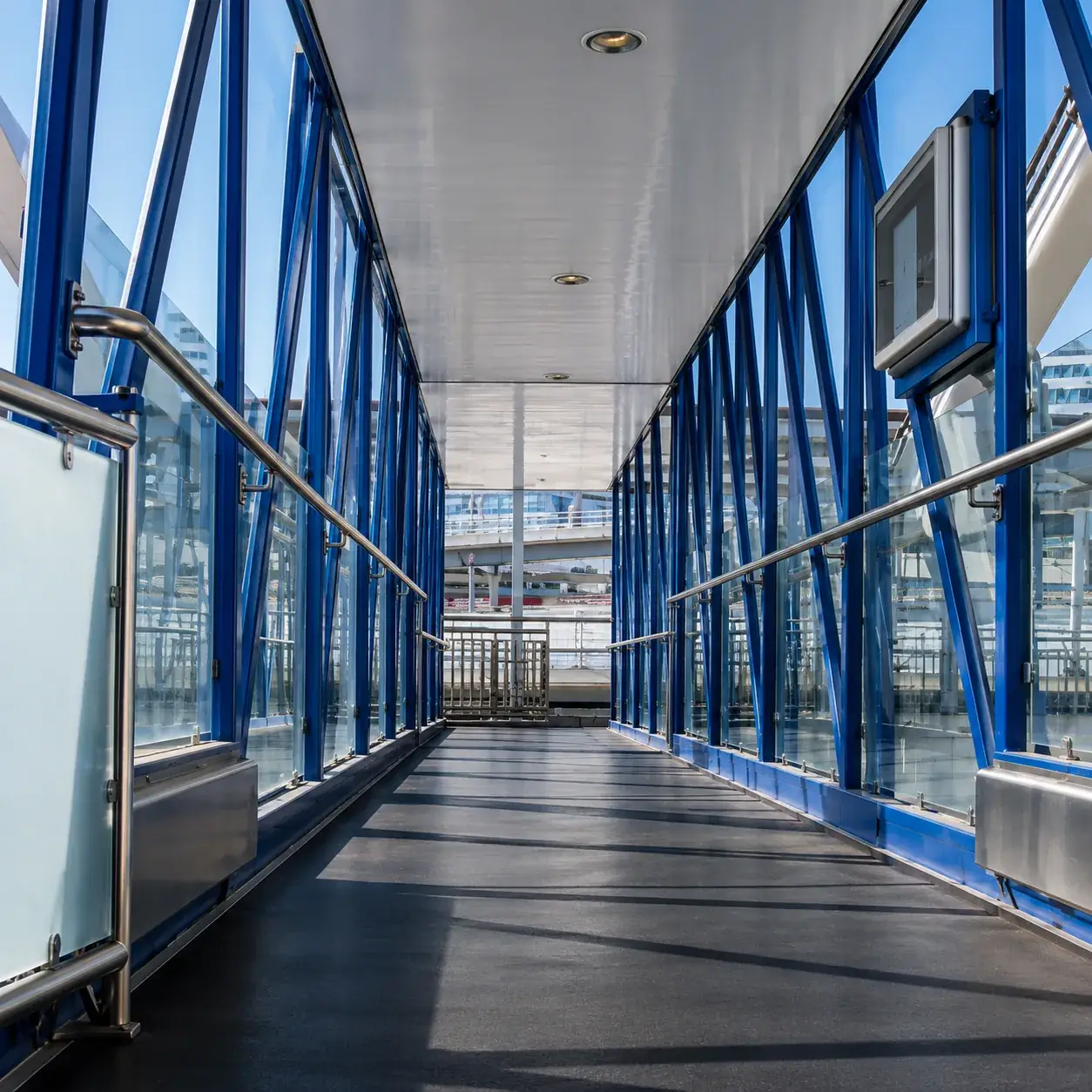

Port passenger walkways used for the boarding and disembarking of passengers are critical infrastructure within any maritime terminal. Their function is not only to facilitate the connection between the vessel and the shore, but also to ensure that the movement of people takes place under optimal conditions of safety, accessibility and operational reliability. For this reason, their design, manufacture, installation and maintenance are subject to a broad regulatory framework that must be taken into account from the earliest stages of any project.
One of the main challenges when tackling a project involving port passenger walkways is the coexistence of different regulatory levels. Unlike other, more standardised infrastructure, passenger walkways sit at the intersection of civil engineering, mechanical engineering, industrial safety, accessibility and port regulations, which calls for a comprehensive analysis of the applicable requirements.
In Europe, the requirements arising from the Machinery Directive and its evolution towards the new European Machinery Regulation are a key reference for any equipment incorporating drive, lifting or mechanical movement systems. These provisions set out requirements relating to user safety, control systems, risk assessment, technical documentation and CE marking.
Alongside these rules, the structures that support the walkways must be designed in accordance with the criteria established in the structural Eurocodes, particularly with regard to imposed loads, wind loads, structural strength, fatigue and durability. In port environments, where infrastructure is exposed to especially aggressive conditions, considering corrosion phenomena and selecting suitable materials become decisive.
Another essential aspect is compliance with universal accessibility regulations. Passenger terminals must ensure that everyone can use the facilities on equal terms, regardless of their physical or sensory abilities. This means considering aspects such as maximum gradients, passage widths, signage, lighting, support elements and accessible routes when designing the walkway and its integration with the terminal.
In the specific case of passenger boarding walkways, there are also specialised technical standards that establish specific design and safety criteria for this type of equipment. These references regulate aspects such as permissible movements, emergency systems, side protection, service loads, control devices and operating conditions in response to the relative movements between vessel and quay.
Nor should the regulations relating to occupational risk prevention be forgotten, especially during maintenance and inspection operations. Safe access to equipment, mechanisms and elevated areas is one of the requirements that must be addressed from the design stage to guarantee safe operation throughout the entire service life of the infrastructure.
Finally, regulatory compliance should not be understood merely as a legal obligation. Correctly applying technical standards helps to reduce operational risks, minimise incidents, optimise maintenance costs and extend the service life of the facility. For this reason, a regulatory review should be part of any new-build, expansion or modernisation project for passenger terminals.
In a context where safety, accessibility and sustainability requirements are increasingly demanding, knowing and correctly applying current regulations is an essential factor in ensuring that port walkways meet the quality standards demanded by modern ports.