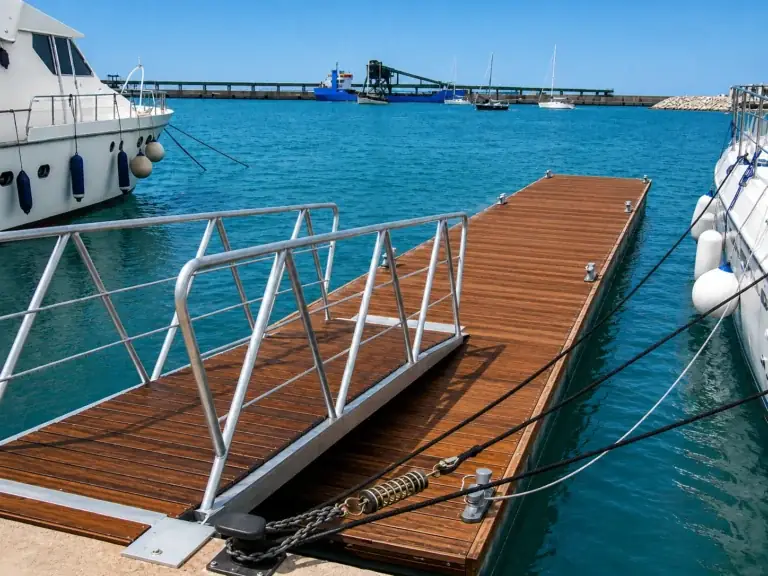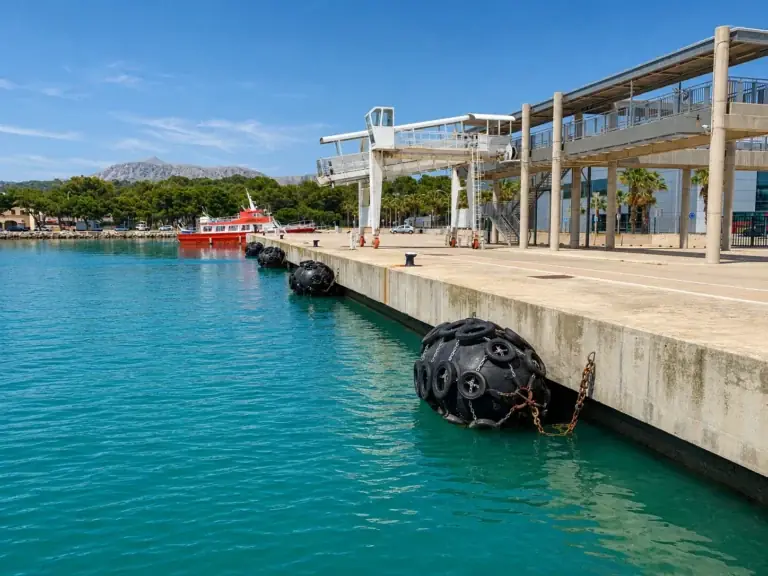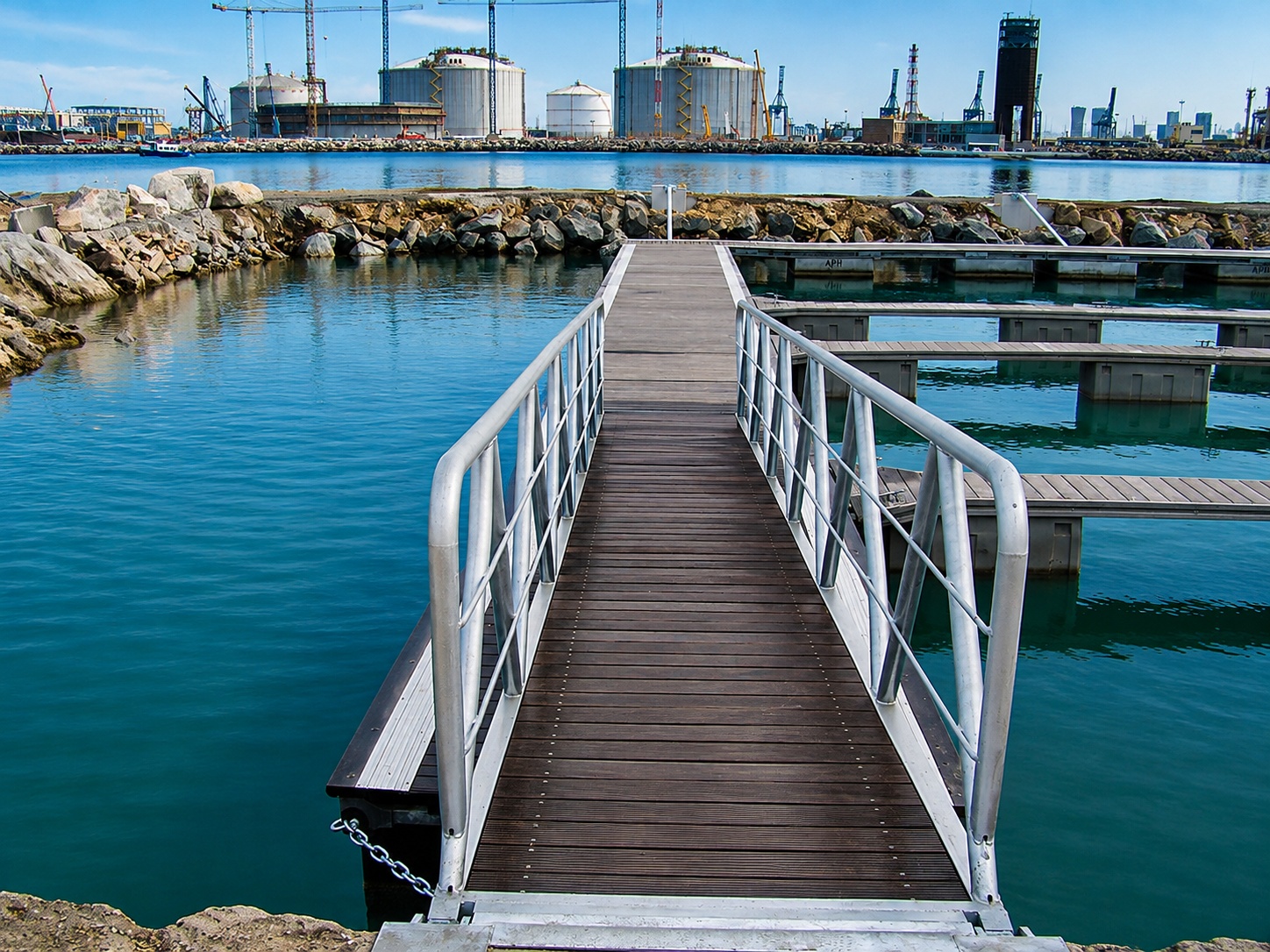
Floating pontoons have become a widely used solution in marinas, fishing facilities, passenger terminals and maritime service areas. Their ability to adapt to changes in water level, together with their versatility and speed of installation, makes them an efficient alternative to other traditional berthing infrastructure.
However, not all floating pontoons meet the same operational needs. Choosing a particular type must be done by considering factors such as the environmental conditions, the type of vessels, the intensity of use and the long-term maintenance requirements.
One of the most common classifications is based on the structural material of the floating modules. Floating concrete pontoons stand out for their high stability, durability and resistance to waves. Thanks to their significant self-weight, they perform particularly well at facilities subject to demanding maritime conditions or intended for berthing large vessels.
Pontoons built with aluminium structures, for their part, offer a lighter, more modular solution. Their corrosion resistance and ease of assembly make them a frequent choice in marinas, yacht clubs and small service facilities where operational flexibility is a priority.
There are also systems built using polyethylene modules or high-density plastic materials. These solutions stand out for their low weight, ease of transport and low maintenance, and they are especially used in temporary facilities, recreational jetties or areas with limited load requirements.
From a functional point of view, pontoons can be classified according to their configuration. Linear pontoons are the simplest solution and are commonly used as access walkways or single berthing lines. Comb-type pontoons, widely used in marinas, incorporate fingers or perpendicular berths that maximise the number of available berthing spaces. T-, L- or floating-platform configurations, on the other hand, offer specific solutions for boarding operations, waiting areas, port services or specialised nautical activities.
Another important criterion is the mooring and anchoring system. Depending on the site conditions, pontoons may be guided by piles, mooring chains, concrete anchor blocks or combined systems. The choice of each solution directly influences the stability of the infrastructure, its behaviour in wind and waves, and its installation and maintenance costs.
Environmental conditions are a decisive factor in any project. Aspects such as tidal range, exposure to waves, currents, water depth and the nature of the seabed must be analysed in detail to guarantee appropriate behaviour throughout the facility's service life.
It is also essential to consider the expected service loads. A pontoon intended for light recreational vessels has very different requirements from a facility for passenger ferries, port service vessels or industrial activities. The structural sizing must always respond to the real operating needs and to forecasts for future growth.
In short, floating pontoons offer a wide variety of solutions capable of adapting to virtually any maritime environment. Selecting the right type requires a technical analysis that considers both the site conditions and the operational needs of the facility, thereby guaranteeing safe, durable and efficient infrastructure over the long term.