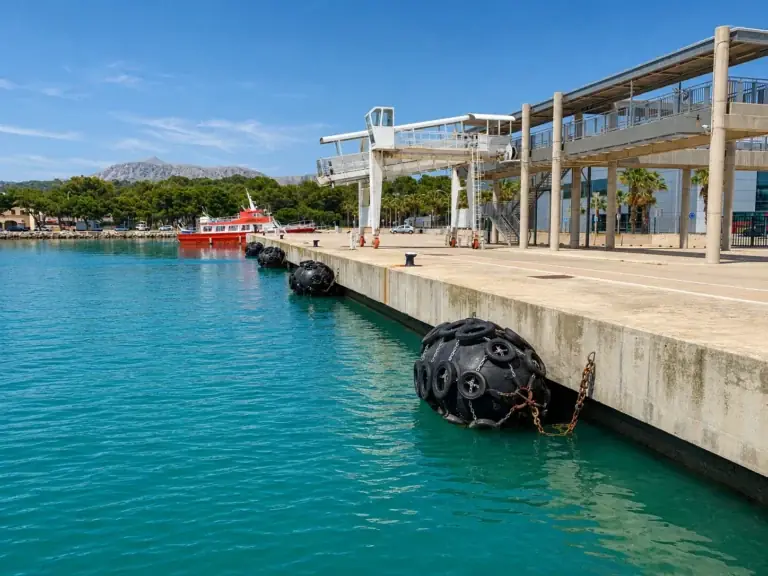
Port fenders are fundamental elements for protecting vessels and infrastructure during berthing manoeuvres. Their function is to absorb the energy generated by contact between the vessel and the quay, reducing the loads transmitted both to the hull and to the port structure. However, like any equipment subject to continuous stress and demanding environmental conditions, their performance declines over time, making it necessary to monitor their condition and plan their replacement when appropriate.
One of the most common questions among port managers, engineering firms and maintenance managers is how long a port fender can remain operational. The answer depends not only on the age of the equipment, but on multiple factors relating to the environment, the intensity of use, the quality of the materials and the maintenance carried out over its service life.
Under normal operating conditions, a correctly designed and installed port fender can offer a service life of more than twenty years. However, this reference can vary significantly depending on the type of fender and the specific conditions of the facility. Fenders subject to a high number of daily manoeuvres or exposed to particularly aggressive environments may experience more accelerated ageing.
The manufacturing material is one of the most decisive factors. Most modern fenders are made from elastomeric compounds specifically developed to withstand repeated deformation without a significant loss of their mechanical properties. However, prolonged exposure to ultraviolet radiation, salinity, thermal variations and certain chemical agents can cause progressive degradation processes that affect their behaviour.
The frequency and intensity of berthing manoeuvres also directly influence the system's durability. Each impact generates compression and recovery cycles that, over the years, can produce fatigue in the materials. This phenomenon is especially relevant at commercial terminals, fishing ports or facilities with high activity levels where the fenders work continuously.
Another key aspect is how well the design matches the real service conditions. A fender that is insufficiently sized for the vessels operating at the berth will be subject to loads greater than anticipated, accelerating its deterioration and significantly reducing its service life. Conversely, a design correctly adapted to the operating conditions makes it possible to optimise the system's behaviour and extend its durability.
The ancillary elements associated with the fender also require attention. Front panels, chains, anchors, fixing plates and metal components are exposed to corrosion and wear that can compromise the overall performance of the system, even when the main elastomeric body still maintains acceptable conditions.
For this reason, periodic inspections are an essential tool within any port maintenance programme. Early detection of permanent deformation, cracks, detachment, corrosion or loss of absorption capacity makes it possible to plan corrective action before failures occur that could affect the safety of operations.
Today, the trend in port infrastructure management is moving towards the concept of life-cycle-based maintenance, where repair or replacement decisions are made not only on the basis of the equipment's age, but on its actual condition and its ability to continue meeting the established operational requirements.
In short, the service life of a port fender depends on a combination of technical, environmental and operational factors. Beyond a specific number of years, what really matters is having an appropriate inspection and maintenance programme that ensures the system continues to offer the levels of protection and safety for which it was designed. Preventive management of these elements helps to extend their durability, optimise investment and preserve the integrity of port infrastructure over the long term.