Safety is one of the fundamental pillars in the management of any marina or nautical facility. Although much of the attention tends to focus on mooring systems, berthing infrastructure or rescue equipment, there are seemingly simple elements that play a crucial role in protecting people. Among these are emergency ladders, designed to make it easier to get out of the water in the event of an accidental fall.
Port environments present numerous risk factors. Wet surfaces, vessel movements, adverse weather conditions or boarding and disembarking manoeuvres can cause both users and maintenance personnel or port workers to fall into the water. In such situations, the ability to get out of the water quickly can be decisive in preventing serious consequences.
Emergency ladders allow a person to climb back onto the pontoon or quay without the need for immediate outside assistance. Their role is particularly important at recreational facilities, where many users have neither personal protective equipment nor specific training in maritime operations.
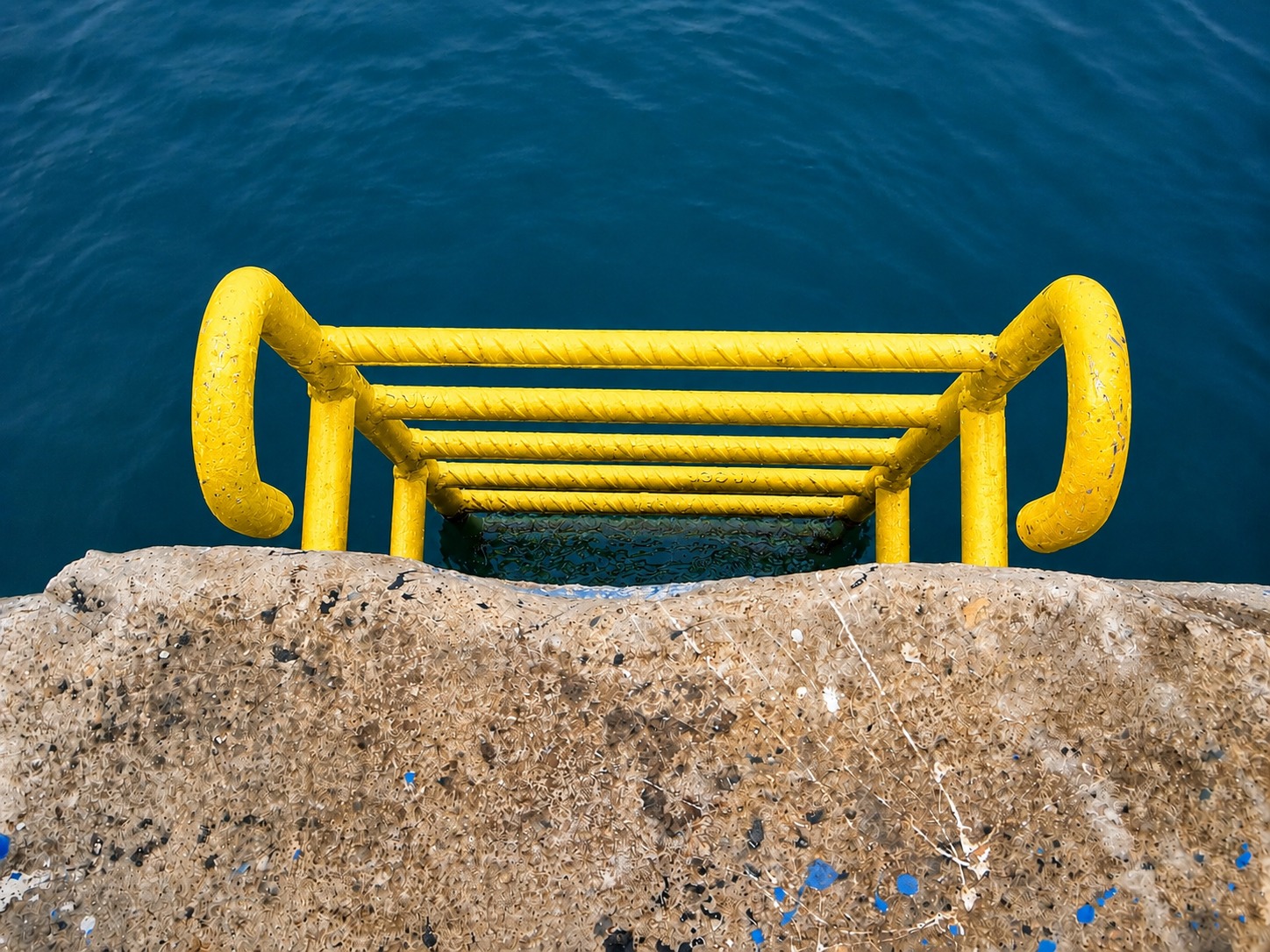
From a technical standpoint, these ladders must be designed to remain visible and accessible at all times. Their location must allow them to be identified quickly from the water, even in low-visibility conditions or stressful situations. For this reason, they usually incorporate specific signage elements and finishes that make them easier to locate during an emergency.
Corrosion resistance is another fundamental aspect. As they are permanently exposed to marine environments, emergency ladders are usually manufactured in marine-grade stainless steel, aluminium or composite materials capable of withstanding the continuous action of humidity and salinity without losing their mechanical performance.
Ergonomics also play an essential role in their design. The rungs must allow a safe climb even when the user is fatigued or wearing wet clothing. Likewise, it is important that part of the ladder remains submerged to provide an initial foothold from the water, avoiding excessive effort during the exit manoeuvre.
In modern marinas, the installation of emergency ladders usually forms part of general safety and self-protection plans. Their distribution must be studied to ensure that anyone who falls into the water can reach a ladder within a reasonable distance, minimising the time spent in the water.
In addition to their correct location, it is essential to carry out periodic inspections to verify their condition, the stability of their anchorages and the absence of obstacles that may hinder their use. A deteriorated or inaccessible ladder can seriously compromise the effectiveness of the rescue system in a real emergency.
Current trends in port design are also driving the incorporation of more visible and accessible solutions, integrating ladders within overall safety strategies that include lifesaving equipment, emergency lighting, signage and rescue devices.
In short, emergency ladders are an indispensable piece of safety equipment at any marina. Their correct selection, installation and maintenance contribute directly to protecting users, improve the capacity to respond to incidents and reinforce the facility's commitment to the highest standards of maritime safety.