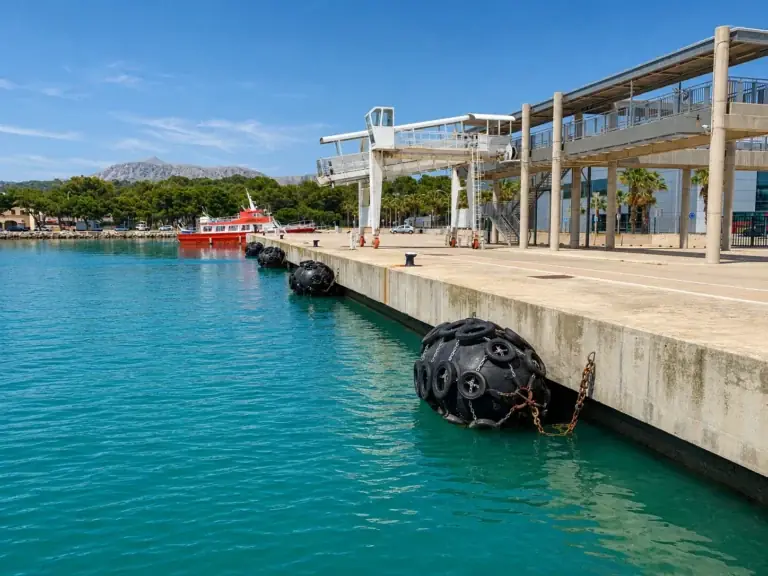
Bollards are among the most important components of any port infrastructure. Although their design may appear simple, they play a critical role in the safety of berthing and mooring operations, as they are responsible for transferring the loads generated by a vessel's mooring lines to the quay structure.
An incorrect bollard selection can lead to operational problems, structural overloads and even hazardous situations under adverse weather conditions. For this reason, choosing the appropriate bollard requires a thorough engineering assessment that takes into account both the characteristics of the vessels using the facility and the specific operating conditions of the berth.
The first factor to consider is the required Safe Working Load (SWL). This capacity depends not only on the size of the vessel but also on the forces acting on it while moored. Wind, currents, waves, tidal variations, and loading or unloading operations generate loads that are transmitted directly to the mooring system. The bollard must be capable of withstanding these forces while complying with the applicable standards and accepted port engineering practices.
Another key consideration is the type of maritime traffic using the facility. The requirements of a marina, a fishing harbour, a passenger terminal and a commercial cargo terminal differ significantly. Each type of installation accommodates vessels with different dimensions and operational characteristics, directly influencing the required capacity and configuration of the mooring system.
The geometry of the berth also plays a decisive role in bollard selection. The arrangement of the bollards should ensure the proper alignment of the mooring lines, avoiding excessive lead angles that could reduce mooring efficiency or generate unexpected loads. A well-designed bollard layout improves manoeuvrability while enhancing safety during berthing and unberthing operations.
Equally important is the structural integration of the bollard with the quay. The bollard and its anchoring system must be designed together with the supporting structure to ensure the correct transfer of loads. Installing a high-capacity bollard serves little purpose if the quay itself has not been designed to withstand the associated forces.
Environmental conditions at the site represent another important factor. Continuous exposure to the marine environment requires materials and protective systems capable of resisting corrosion over the long term. The durability of the equipment depends largely on the quality of the materials used, together with a well-planned programme of inspection and maintenance.
It is also important to consider the future development of the port. Increases in maritime traffic, the arrival of larger vessels or changes in the use of the berth may require higher mooring capacities than originally anticipated. Incorporating this long-term perspective during the design phase helps maximise the return on investment while extending the service life of the infrastructure.
Ultimately, selecting a bollard involves far more than choosing a specific load capacity. It is an engineering decision that must integrate operational, structural and safety criteria to ensure a reliable, efficient and future-proof mooring system capable of meeting both current and future port requirements.